
Blog
What Your Garage Door Is Trying to Tell You
Spartanburg homes run from 1938 to 2013, mostly 1960s-70s builds, and that age shows up in the noise your door makes. Here's what each sound means.
What Is Going On
A garage door makes noise for a reason, and in this area the reason usually traces back to when the house was built. Housing stock here runs from 1938 up through 2013, with a median build year of 1979 - and across the 26 neighborhoods we work in, most of the stock is still that 1960s and 70s build. That means a lot of the doors we look at still have the original rollers, the original hardware, the original torsion spring sized for a weight estimate that may not match what's hanging on the track now. A knock or thud when the door starts moving is often just a roller that's worn its wheel flat on one side. A rattle along the track is usually a bracket that's worked loose over forty or fifty years of expansion and contraction. None of this is dramatic. It's what happens to steel and nylon parts that have been doing the same job since Nixon or Carter was in office, and most houses on this side of town fall right in that window.
When to Get Help
Some noises are nothing. A light squeak on a dry hinge is a five-minute fix with the right lubricant. Other sounds mean a part is close to failing, and on a door built the way most of these were, failure usually means the spring, not the opener. A loud bang followed by the door going slack is a broken torsion spring - stop using the door and call, because the cable can still be under tension even after the spring lets go. A grinding sound that gets worse every time you open the door points to a roller bearing that's seized, and left alone it'll chew into the track rail itself, which is a bigger repair than the roller ever was. A scraping or popping along one side usually means the track has pulled away from the jamb - common on the older stock here where the framing has settled over sixty-plus years. We don't recommend waiting on any of those three. A squeak can wait for your next free Saturday. A bang, a grind, or a scrape can't.
What Changes With the Season
This area sits in a cold moderate climate band, which means real temperature swings but nothing extreme. That matters for noise because steel parts - springs, tracks, hinges - contract when it's cold and expand when it's warm, and a door that ran quiet in August will often start groaning in January as the metal tightens up on itself. Grease that worked fine all summer can stiffen in a cold snap, which is why a lot of our winter calls are doors that suddenly sound like they're dragging. The fix is usually just a seasonal lubrication with something rated for the cold rather than a one-size grease that gums up below freezing. We don't chase extreme-weather damage here the way a shop near the coast or up in the mountains might - this isn't a hurricane-strap conversation or a heavy-snow-load conversation. It's a steady, moderate cycle of hot and cold that slowly works on fasteners, hinges, and spring coils over the decades, and that's the noise we're usually chasing down.
How Local Conditions Play In
Out toward Saxon, Arcadia, and the Southern Shops area - all within three to four miles - you'll find the same era of housing with the same original hardware we see across the rest of the territory, from Valley Falls and Roebuck out past Boiling Springs and Cowpens. Across the service area there are roughly 38,583 households and about 21,429 owner-occupied houses, and with a median household income of $51,353, a lot of owners are stretching a repair instead of swapping the whole door - often the right call on an otherwise sound door with original hardware. The honest limit here: if the track is bent beyond a certain point, or the door itself has delaminated from decades of expansion and contraction, patching the noise just buys a few months before something bigger lets go. We'll tell you straight when a repair isn't worth the service call.
Questions
Common questions
Why does my garage door suddenly sound louder in winter?
We're in a cold moderate climate band, and steel parts like springs, hinges, and track contract when the temperature drops. A door that ran quiet through summer can start groaning or dragging in January just from the metal tightening up and the grease stiffening. A cold-rated lubrication usually fixes it.
My door makes a loud bang and then feels loose, is that serious?
Yes. That's almost always a broken torsion spring, common on the older hardware still found on a lot of houses built here in the 1960s and 70s. Stop using the door - the cable can stay under tension even after the spring breaks - and get it looked at before you try to force it open or closed.
Is a noisy door always the opener's fault?
Usually not. On the older housing stock common across this area, most noise traces back to worn rollers, loose brackets, or an aging spring rather than the opener motor. The opener just gets blamed because it's the part people notice running.
Recommendation
You Might Also Like
More garage door guides for Spartanburg homeowners.
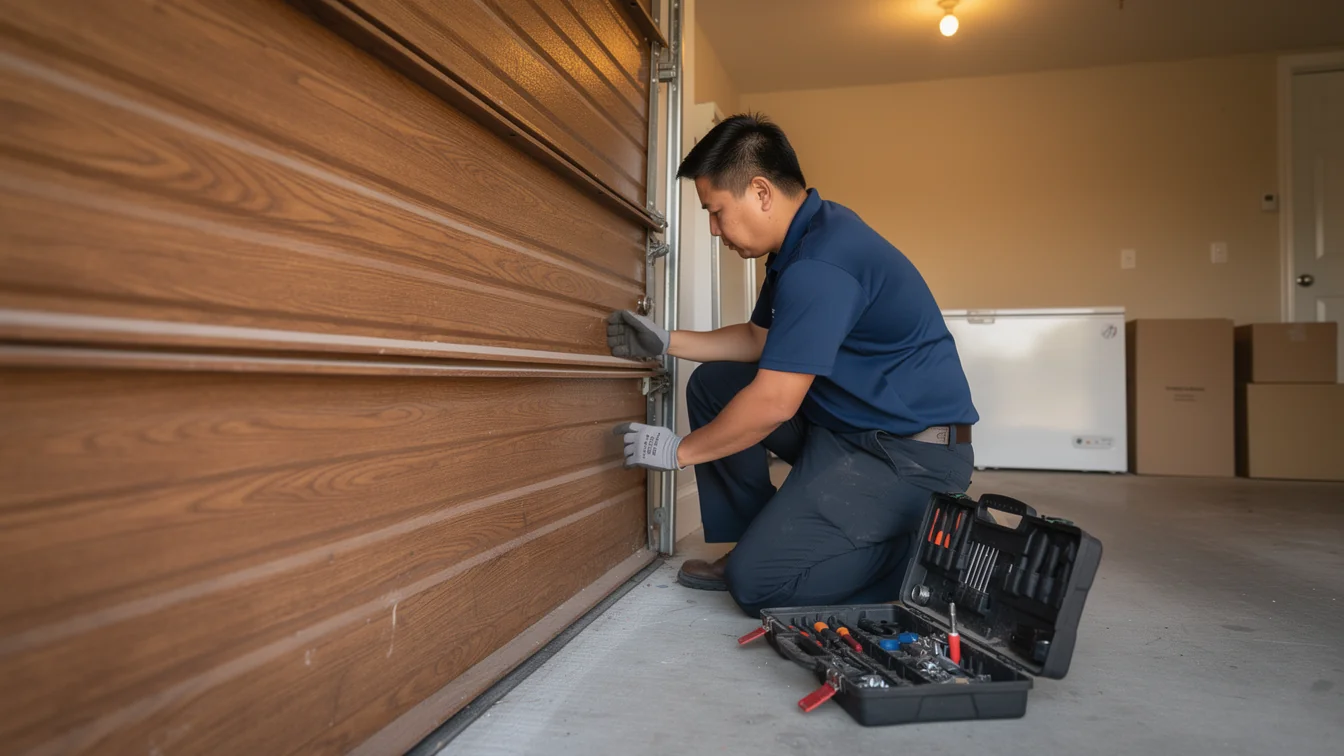
When a Spring Goes in Cold Weather Around Spartanburg
Spartanburg's housing runs 1938 to 2013, mostly 1960s-70s builds, and cold snaps hit aging torsion springs hard.
Read guide
Why Your Garage Door Jumps the Track
Spartanburg homes built mostly in the 1960s and 70s have aging track hardware that shifts with cold-season temperature swings.
Read guide
What's Actually Going On With Garage Doors in Spartanburg
Spartanburg homes built between 1938 and 2013 carry different garage door hardware and insulation needs.
Read guideReady when you are
Need a garage door sorted in Spartanburg?
Spartanburg Garage Door Pros repairs and installs garage doors, springs and openers in Spartanburg, SC and the surrounding area.