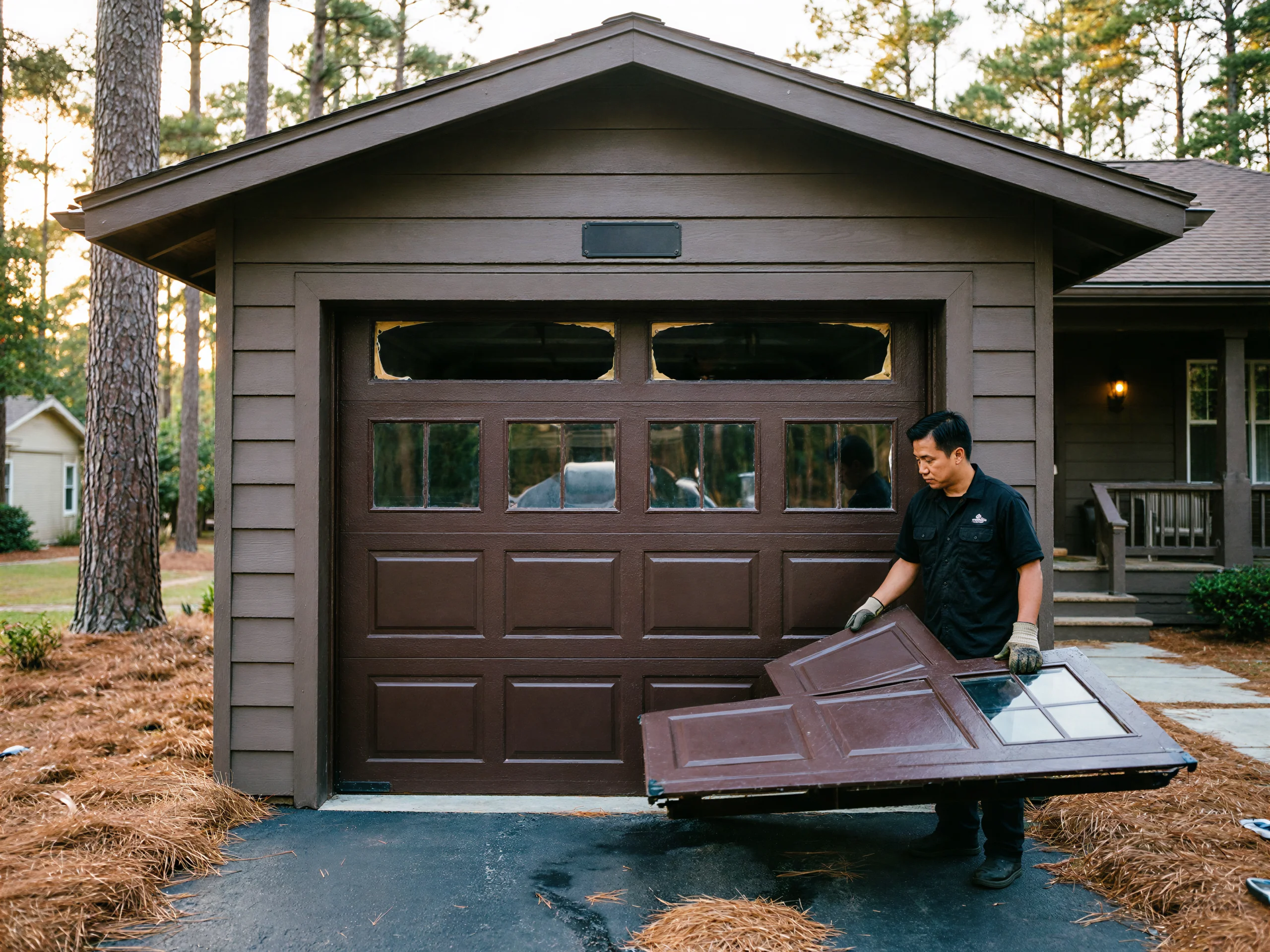
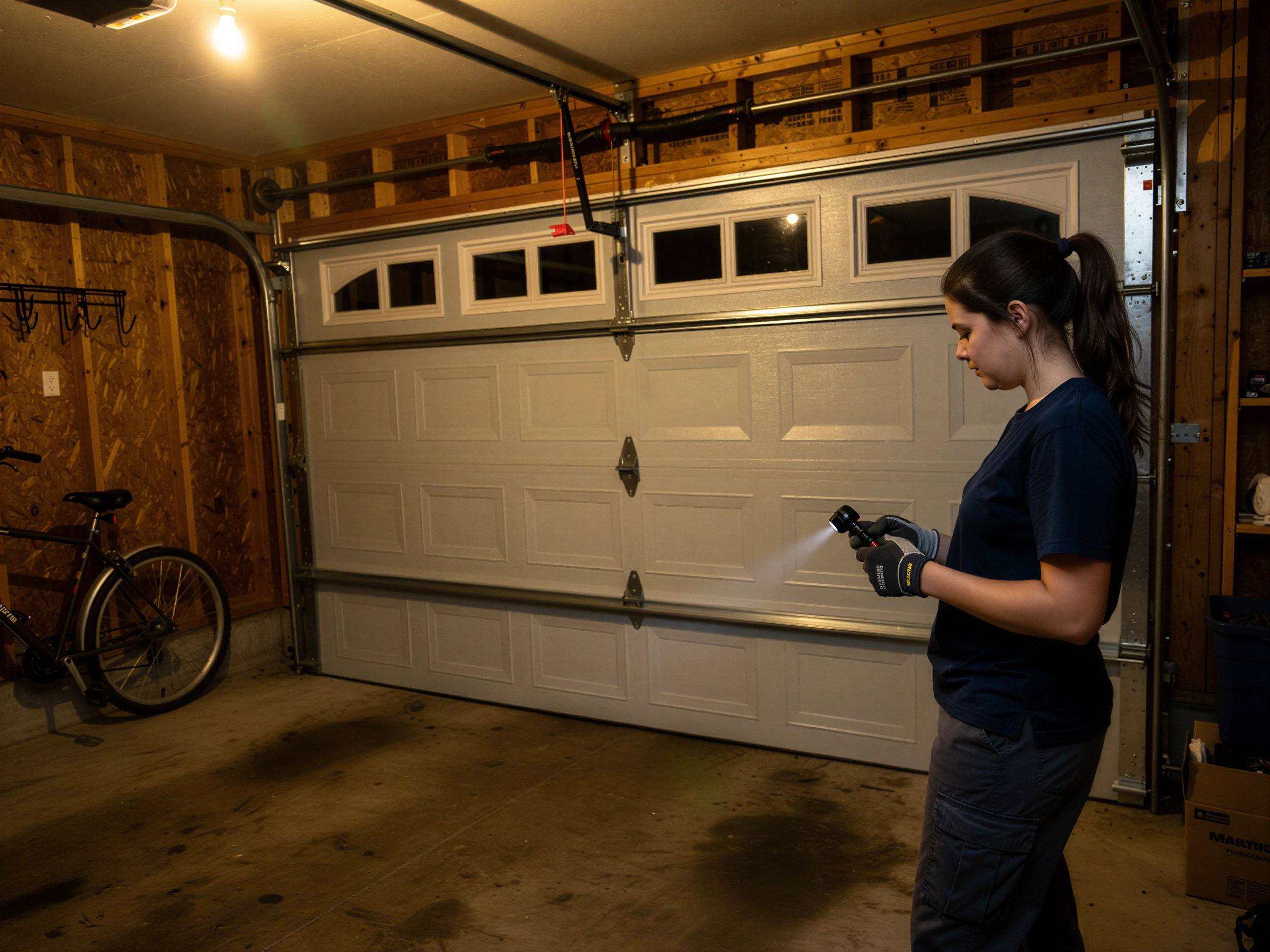
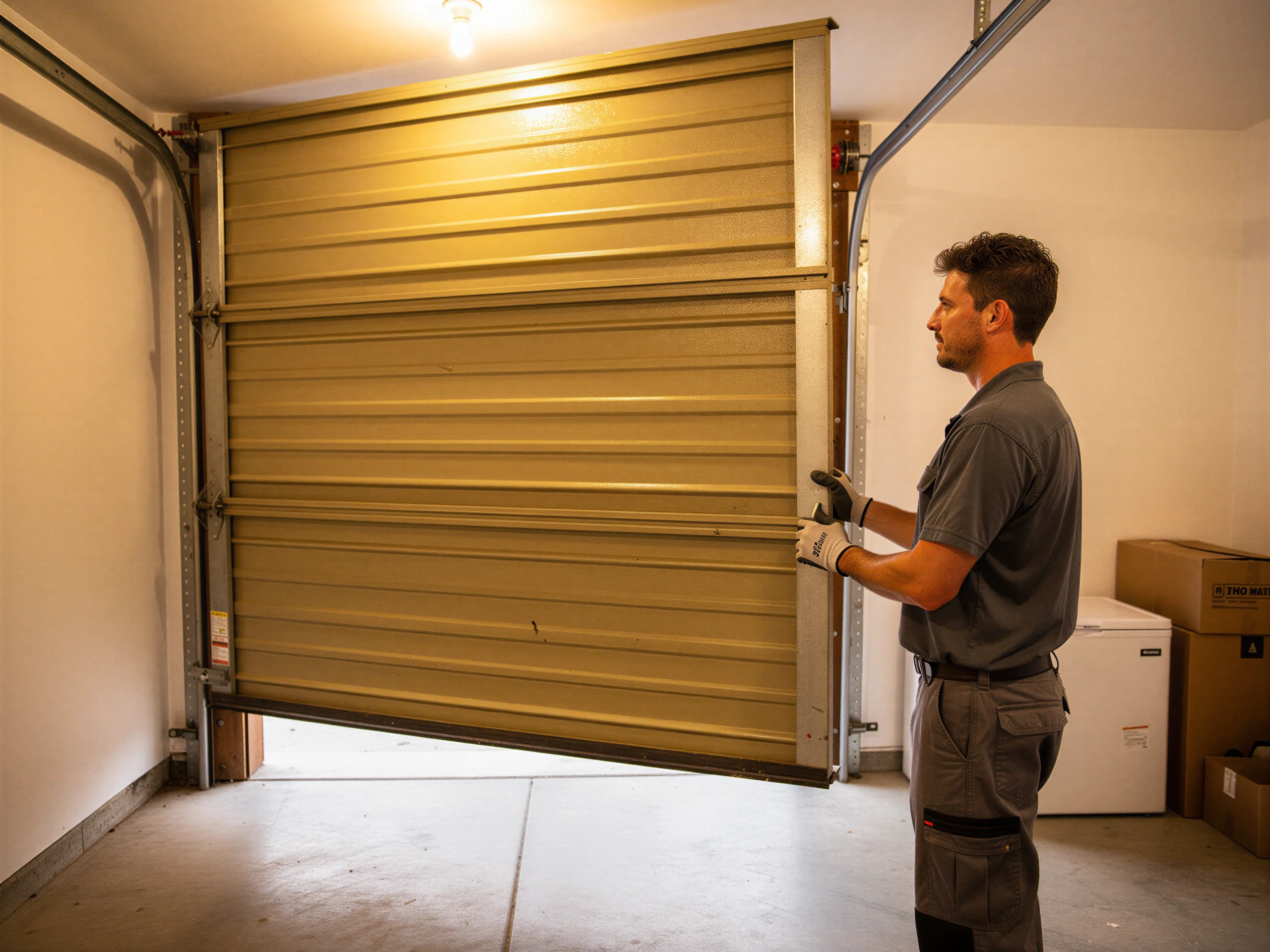
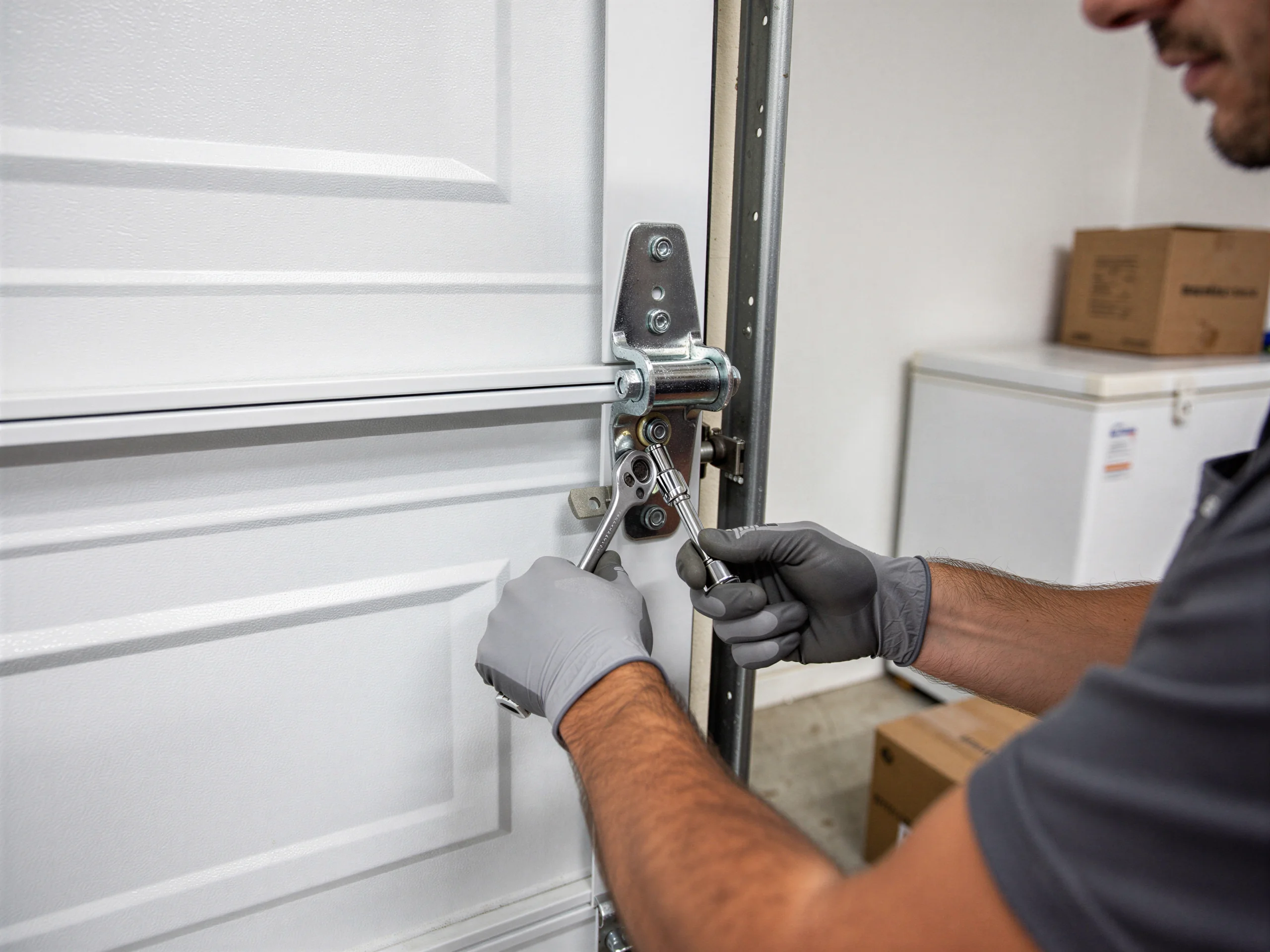
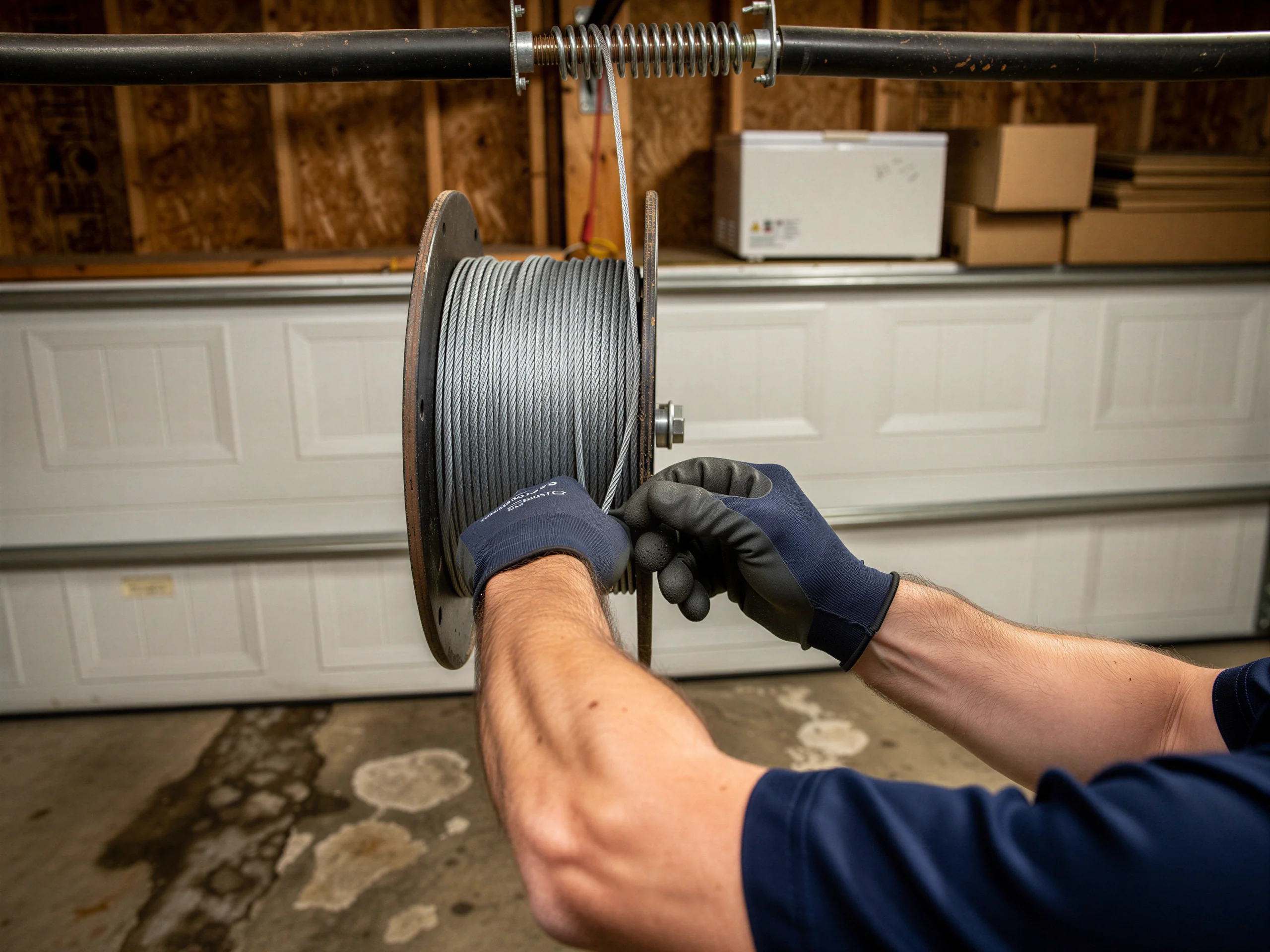
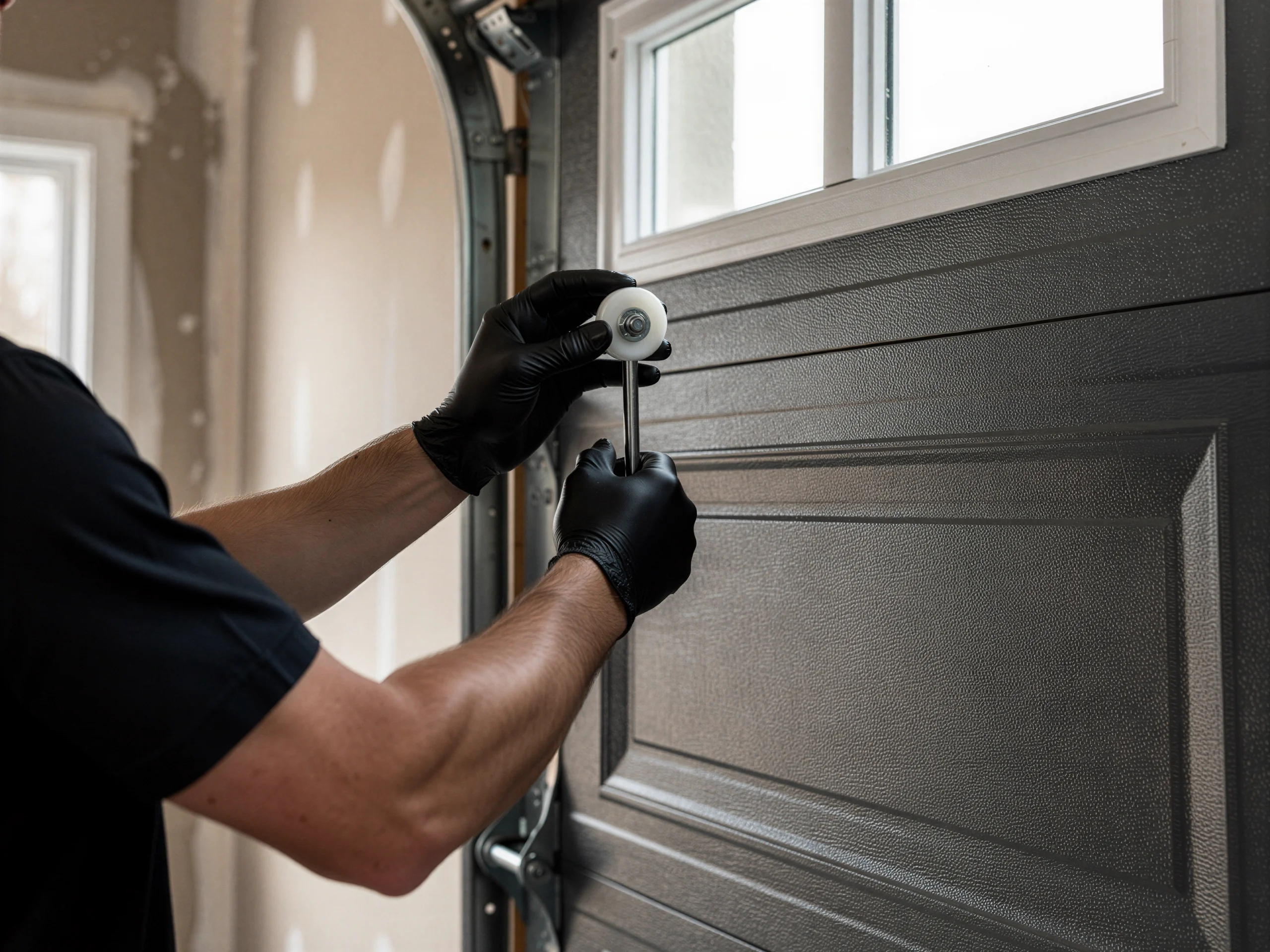
Most installation calls start as a repair call that turns into a replacement decision. Across the 26 named areas we work in - Saxon, Arcadia, Southern Shops, Valley Falls, Roebuck, Glendale, Fairforest, and out to Boiling Springs, Pauline, and Cowpens - most of the housing dates to the 1960s and 70s, a period when garage doors were single-layer steel with no insulation and hardware sized for lighter openers. By now those doors are sagging at the bottom panel, the seams are rusting through where water sits, and the track is worn oval instead of round. Homeowners usually notice it as a door that's suddenly heavier to lift, a panel that's visibly bowed, or a door that won't seal flush at the bottom anymore no matter how many times the track gets adjusted. On the newer end of the housing stock, from the 1990s and 2000s builds, the complaint is different - it's an outdated opener that no longer talks to a phone or a car, paired with a door that's structurally fine. Both end up at the same conversation: replace the door, or replace the door and the opener together.