
Blog
Why Your Garage Door Jumps the Track
Spartanburg homes built mostly in the 1960s and 70s have aging track hardware that shifts with cold-season temperature swings. Here's what actually knocks a door off track.
What Is Going On
A garage door runs on two vertical tracks bolted to the frame, curving into horizontal tracks near the ceiling. Rollers ride inside those tracks, guided by brackets that hold everything square. When a door goes off track, it's almost never the track itself that failed first - it's something that pushed the door sideways until the rollers popped loose.
In a lot of the housing stock around here, built mostly through the 1960s and 70s with some newer construction stretching to 2013, the track brackets are original equipment. Fifty-plus years of thermal cycling loosens the lag screws holding the vertical track to the jamb. Once a bracket has even an eighth of an inch of play, the door racks slightly every time it runs, and eventually a roller rides up over the track flange instead of staying inside it.
The other common cause is a broken cable or uneven spring tension pulling one side of the door down faster than the other. On a door that's been fine for years, a sudden off-track event after a cable snap is mechanical, not a sign the whole system is bad - though it often means the opposite side's hardware isn't far behind.
When to Get Help
Stop using the opener the moment a door looks crooked in the opening, even slightly. A door that's partway off track can fall unevenly, and the torsion spring is still under full tension whether the door is seated correctly or not - that's the part that hurts people.
Call right away if you hear a loud bang followed by the door sitting cockeyed, if a cable has visibly come off the drum, or if one bottom corner sits lower than the other. Those point to hardware failure under load, not a door that just needs a nudge back into the track.
We'll be straight with you: if the track is bent, we don't recommend trying to bend it back into shape on an older section. Track bends on impact, usually from a car bumper or a forced opening, and once it's kinked, it won't hold roller position reliably even after it's hammered straight. Replacing that section of track is a smaller job than replacing the whole door, and it's usually the honest answer when a rental or a bump from a vehicle is the cause.
What Changes With the Season
Spartanburg sits in a moderate cold climate band, which means real freeze-thaw swings but nothing as extreme as further north. That matters for track alignment because steel track and wood framing expand and contract at different rates. Every cold snap followed by a warm stretch flexes the lag screw holes in the jamb a little more.
On a house built in the 1960s or 70s - the bulk of the stock in the areas we run calls in - those holes have had fifty winters to work loose. You'll often see the off-track problem show up right after the first hard cold spell of the season, not in the dead of summer. The door ran fine in October and then one January morning it's riding crooked.
We don't see the ice-dam or heavy-snow failures that garages further north deal with - this isn't that kind of climate - but the freeze-thaw cycling itself is enough to work bolts loose over decades, which is the slower, quieter version of the same problem.
How Local Conditions Play In
Across the areas we cover - Saxon, Arcadia, Southern Shops, Park Hills, Duncan Park, and out through Boiling Springs and Pauline - housing age does most of the explaining here. A door built on a house from the 1979 median year has had four decades of bracket loosening most newer installs in Duncan or Five Forks haven't experienced yet.
Income and household size don't change how a track fails, but they do shape what we see on calls: with median household income around $51,000 across the service area, a lot of homeowners are maintaining original hardware rather than replacing doors outright, which means track brackets, rollers, and hinges are often original parts nearing the end of their service life rather than recently upgraded components.
We don't do cosmetic track painting or purely aesthetic hardware swaps - if the track is structurally sound and just needs re-securing, that's the job, not a full hardware replacement.
Questions
Common questions
Why did my garage door suddenly jump off track after years of working fine?
Usually it's a loosened track bracket finally giving way, often right after a cold snap. Spartanburg's freeze-thaw cycling works lag screws loose over decades, and on a house from the 1960s-70s stock common here, that hardware has had a long time to wear in. A snapped cable or uneven spring can also pull a door sideways suddenly.
Can I push a garage door back onto the track myself?
No. The torsion spring stays under full tension even when the door is off track, and that's the part that causes injuries. Leave the door where it is, don't run the opener, and call for a tech to release the spring tension safely before anyone touches the track or rollers.
Is a bent track always a full door replacement?
Not usually. A bent section of track is normally a track replacement, not a full door swap. We don't recommend hammering a kinked track straight on older doors since it rarely holds roller alignment after that kind of damage.
Recommendation
You Might Also Like
More garage door guides for Spartanburg homeowners.
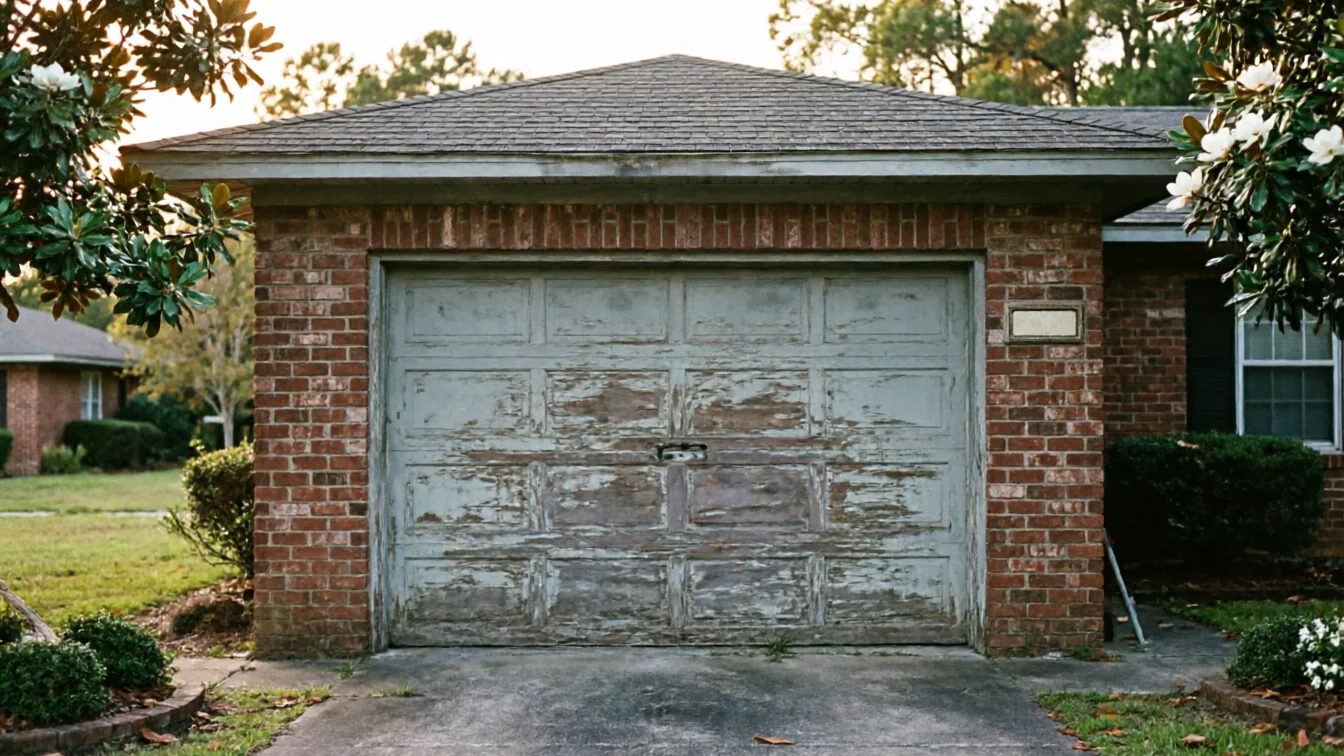
What's Actually Going On With Garage Doors in Spartanburg
Spartanburg homes built between 1938 and 2013 carry different garage door hardware and insulation needs.
Read guide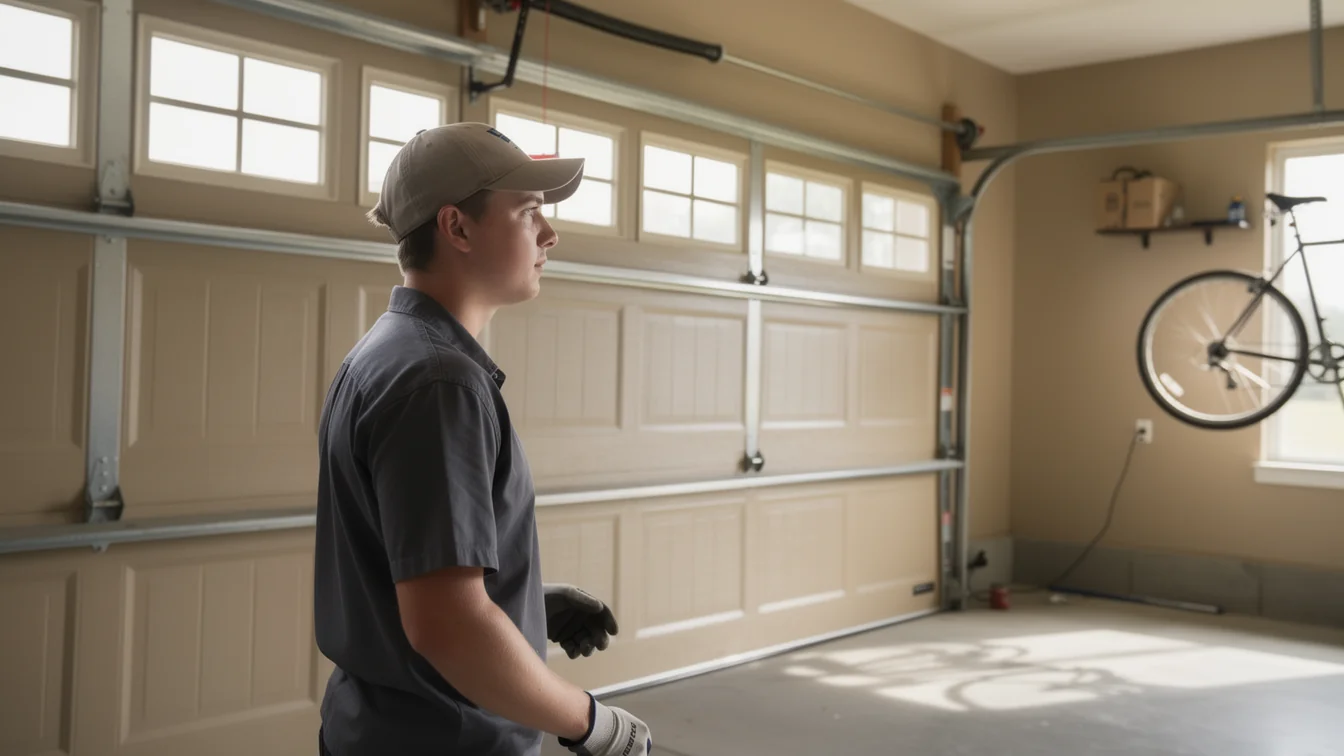
When the Power Goes Out: Openers in Spartanburg Homes
Openers and power cuts in Spartanburg hit homes built between 1938 and 2013 hardest in cold snaps.
Read guide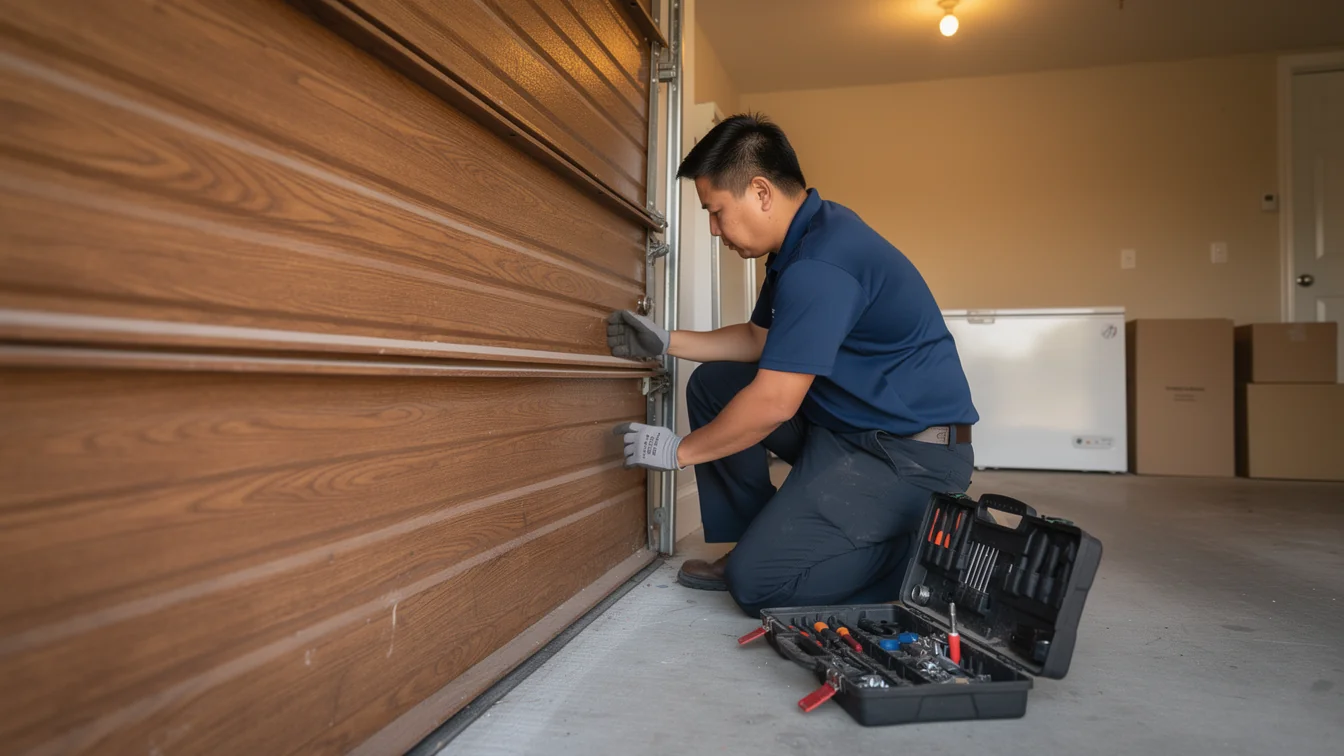
When a Spring Goes in Cold Weather Around Spartanburg
Spartanburg's housing runs 1938 to 2013, mostly 1960s-70s builds, and cold snaps hit aging torsion springs hard.
Read guideReady when you are
Need a garage door sorted in Spartanburg?
Spartanburg Garage Door Pros repairs and installs garage doors, springs and openers in Spartanburg, SC and the surrounding area.