
Lighter builder-grade door springs
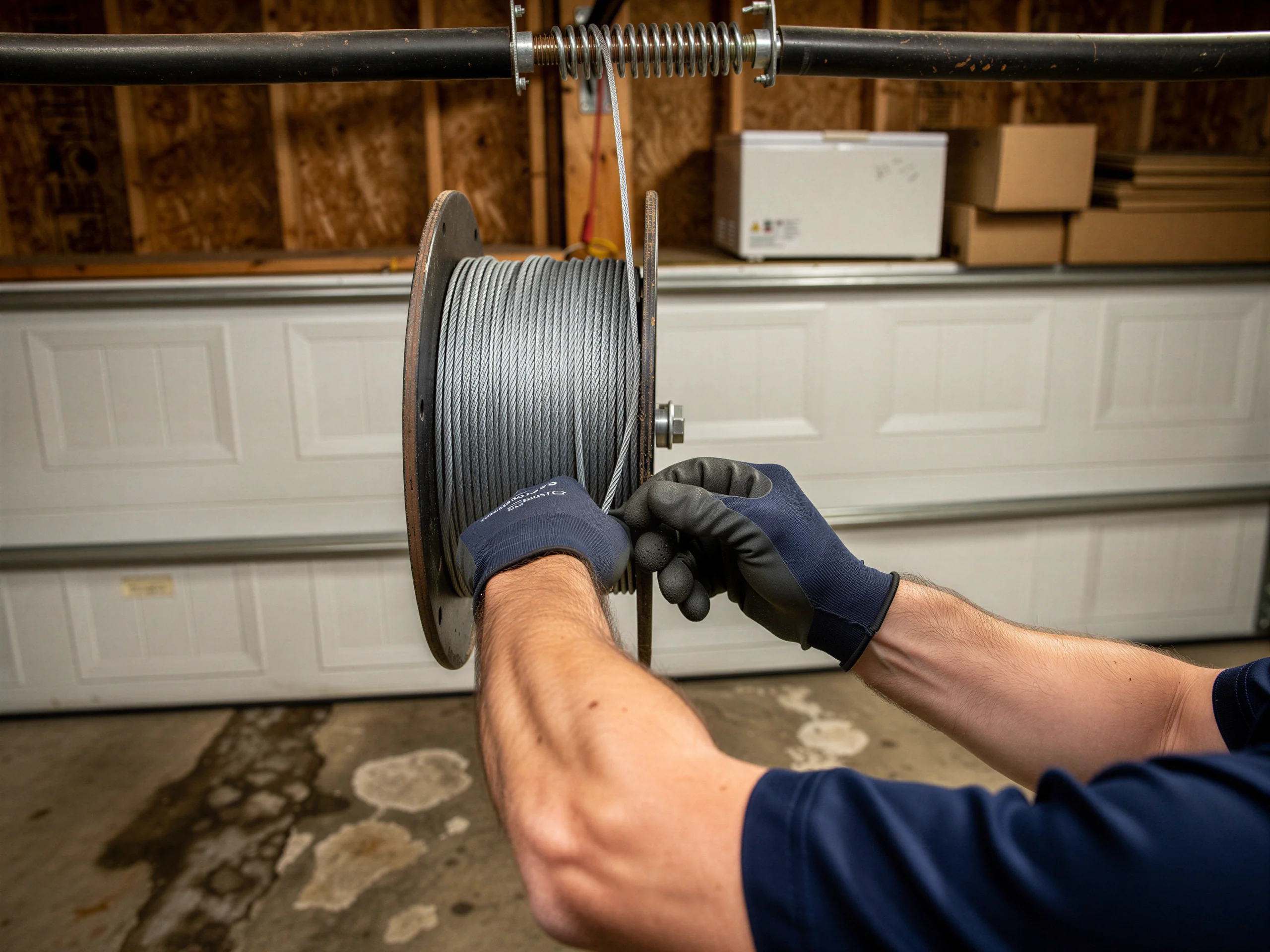
We stock torsion springs sized for the lighter builder-grade doors that make up most of Roebuck's housing, along with standard-drum cable sets and nylon rollers to replace the steel ones that came original.
Roebuck, Spartanburg
Roebuck's garage doors mostly date to the late 1980s builder-grade boom. We work on the steel sectional doors and light-duty torsion hardware that came standard here.
Watch-outs
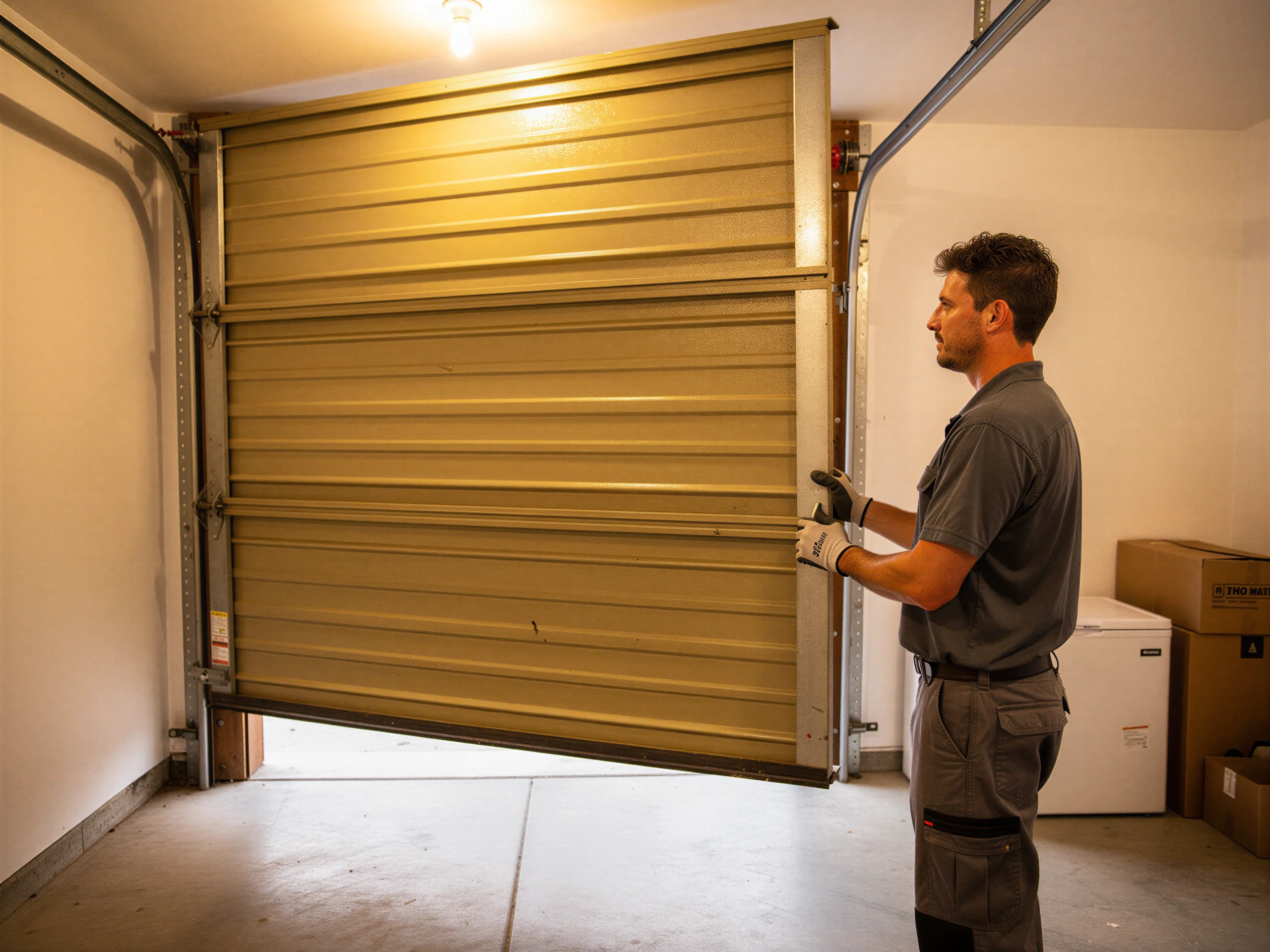
Roebuck's housing stock centers on 1989, which puts most garage doors here squarely in the late-'80s builder-grade generation. That means 16x7 steel sectional doors, roll-formed panels, usually non-insulated or single-layer, hung on a single torsion spring sized to the bare minimum the builder could get away with. These doors are lighter than what you'd find on an older, pre-1960s detached garage, but the hardware wasn't built for forty-plus years of daily cycling. The spring that shipped with the house was rated for the door's original weight, and homeowners who've since added an insulated retrofit panel or a heavier opener bracket are running hardware that's already past its design margin. That's where the job goes sideways: a spring that looks fine until the day it doesn't, usually when the door is halfway up and the cable jumps the drum because the drum itself has worn thin from three decades of the same groove.
On the truck
For a door built around 1989, the common failure points are the torsion spring, the galvanized lift cables, and the original steel rollers, which by now are usually pitted or flat-sided from age rather than any single event.
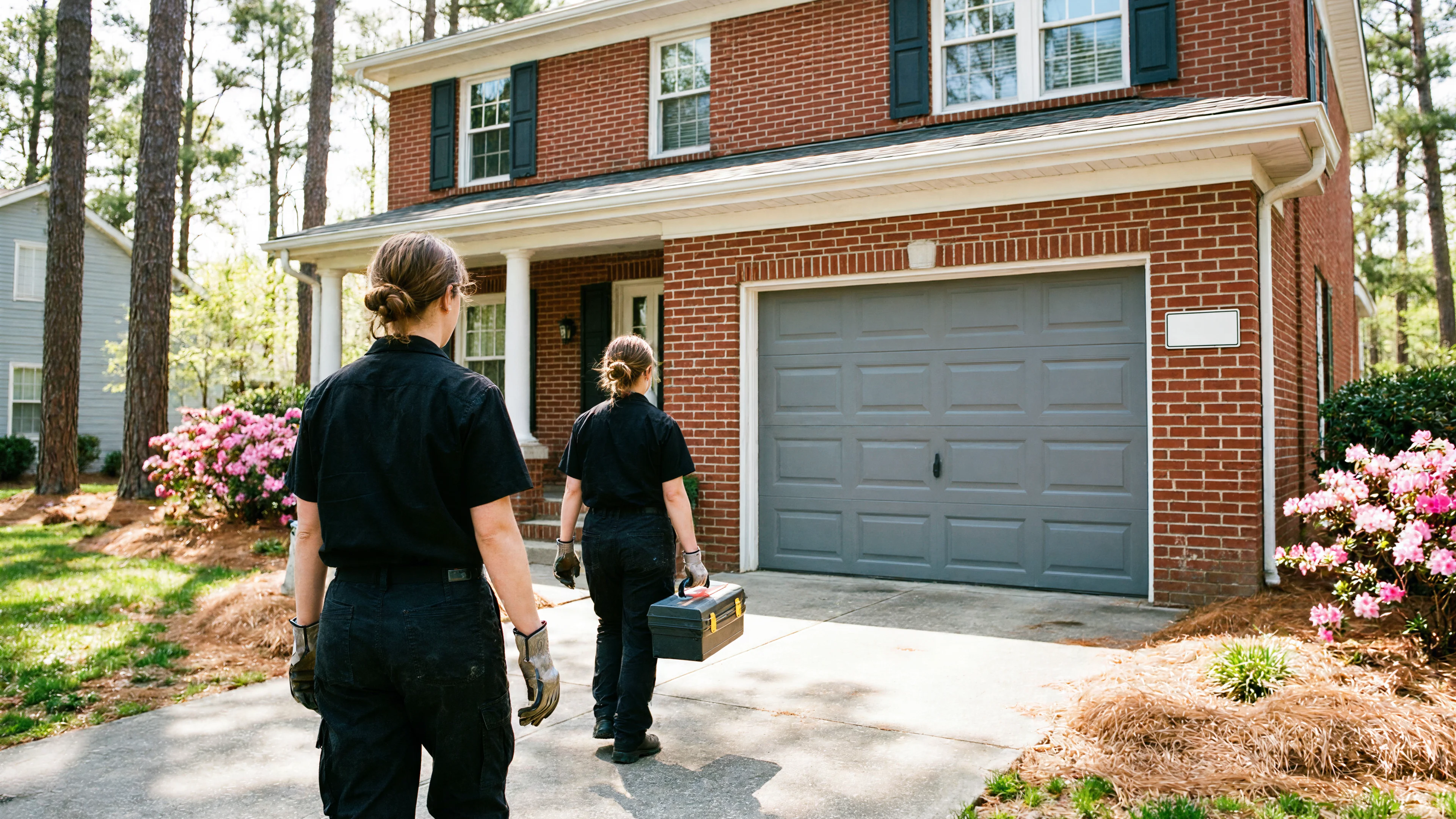
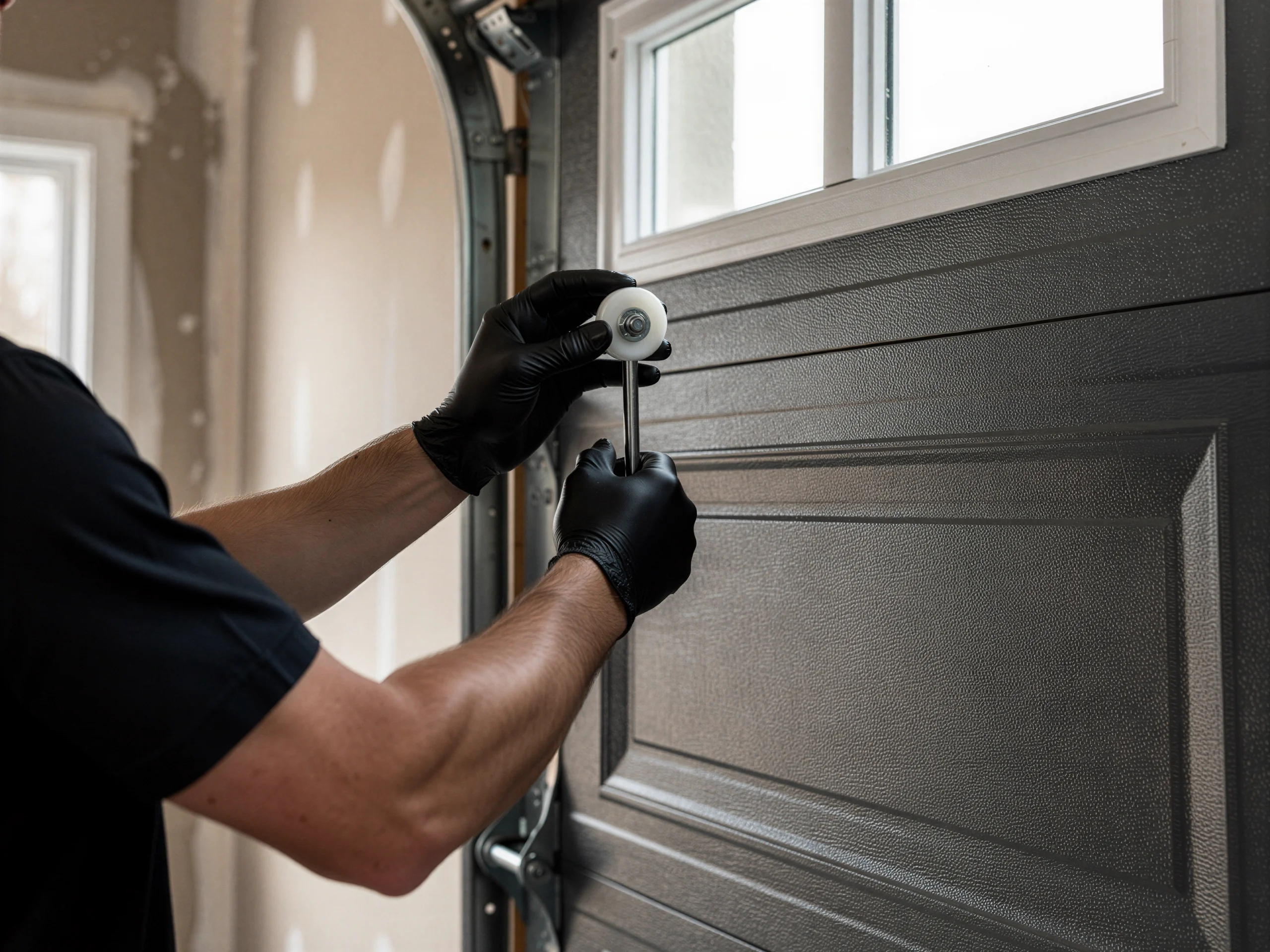
We stock torsion springs sized for the lighter builder-grade doors that make up most of Roebuck's housing, along with standard-drum cable sets and nylon rollers to replace the steel ones that came original.
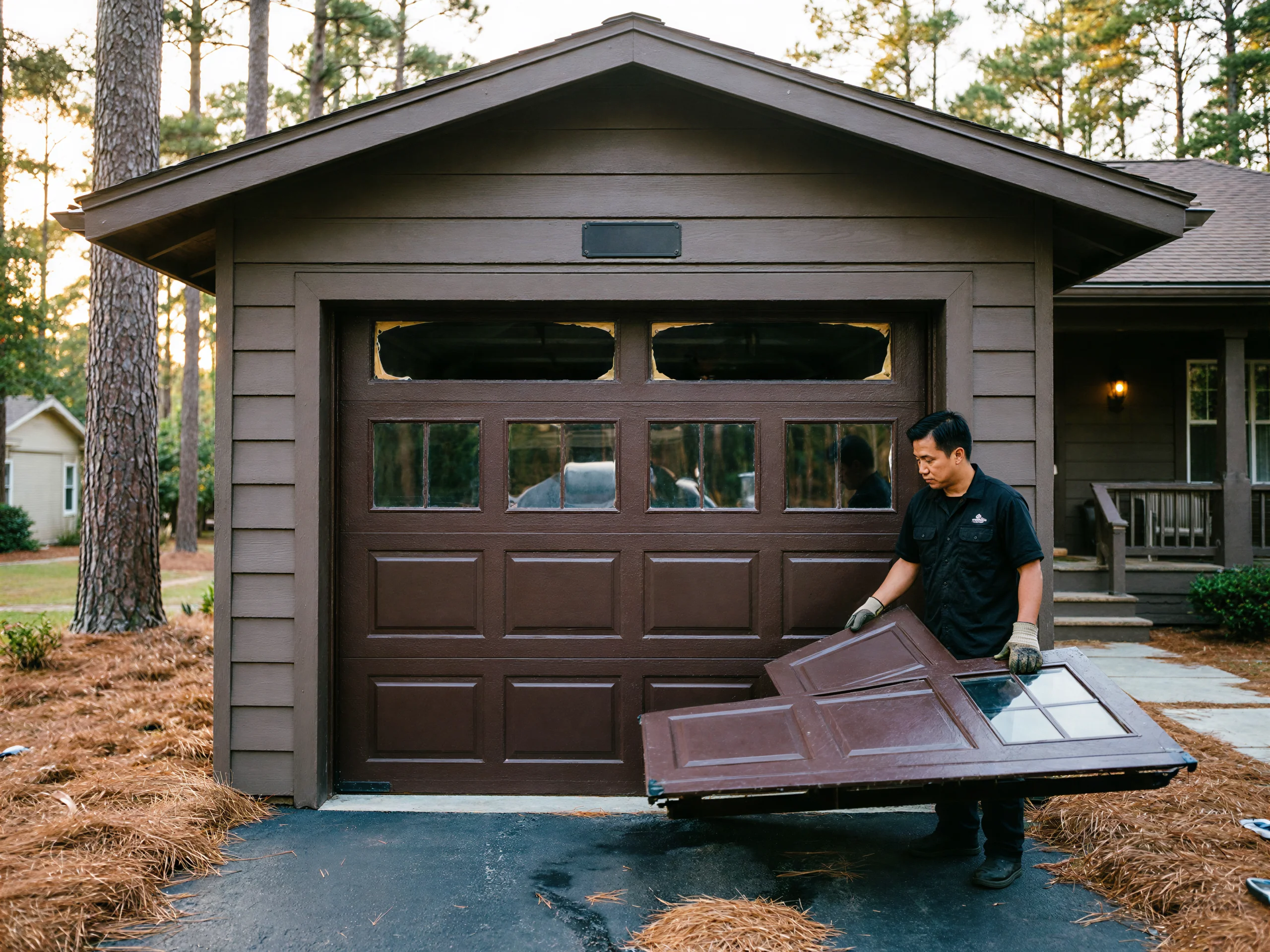
What we don't carry on the truck is replacement wood jamb material or custom panel sections for doors that have been discontinued by the manufacturer - if a panel is cracked or dented beyond what a patch will fix, we'll tell you straight that full replacement is the better call rather than hunting for a match that doesn't exist anymore.
DIY or pro
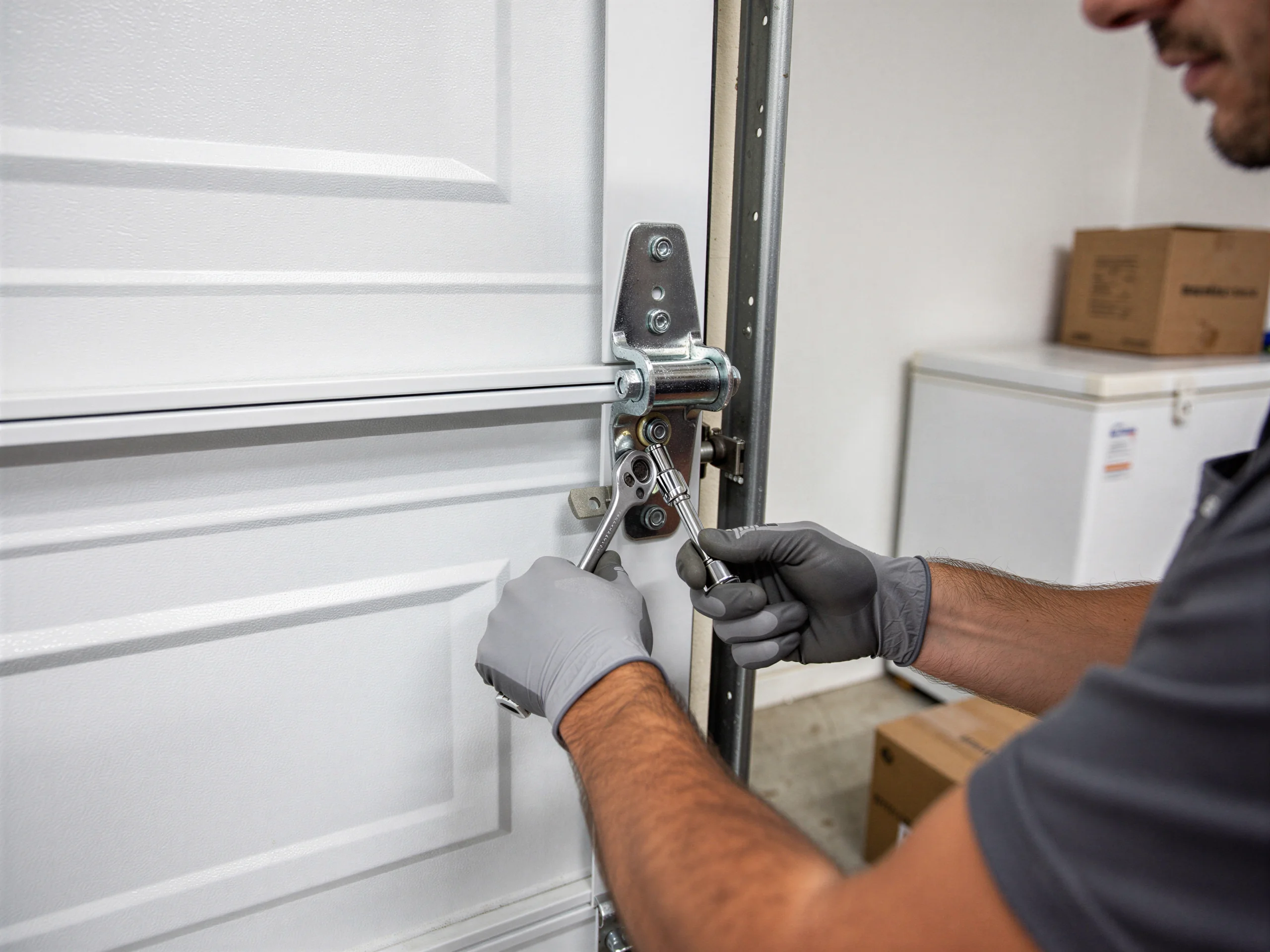
A torsion spring under tension is not a weekend project, full stop, and that's true no matter what year the door was built. But on a door from Roebuck's era specifically, there's an added wrinkle: many of these doors run a single spring instead of a dual setup, which means there's no second spring holding the shaft steady while you work. If that one spring lets go while you're adjusting the winding cone, the bar can come free with enough force to break bone. Cable replacement, roller swaps on a door still on its tracks, and opener sensor alignment are reasonable DIY jobs. Spring work on a single-spring 1980s-era door is not.
Local causes
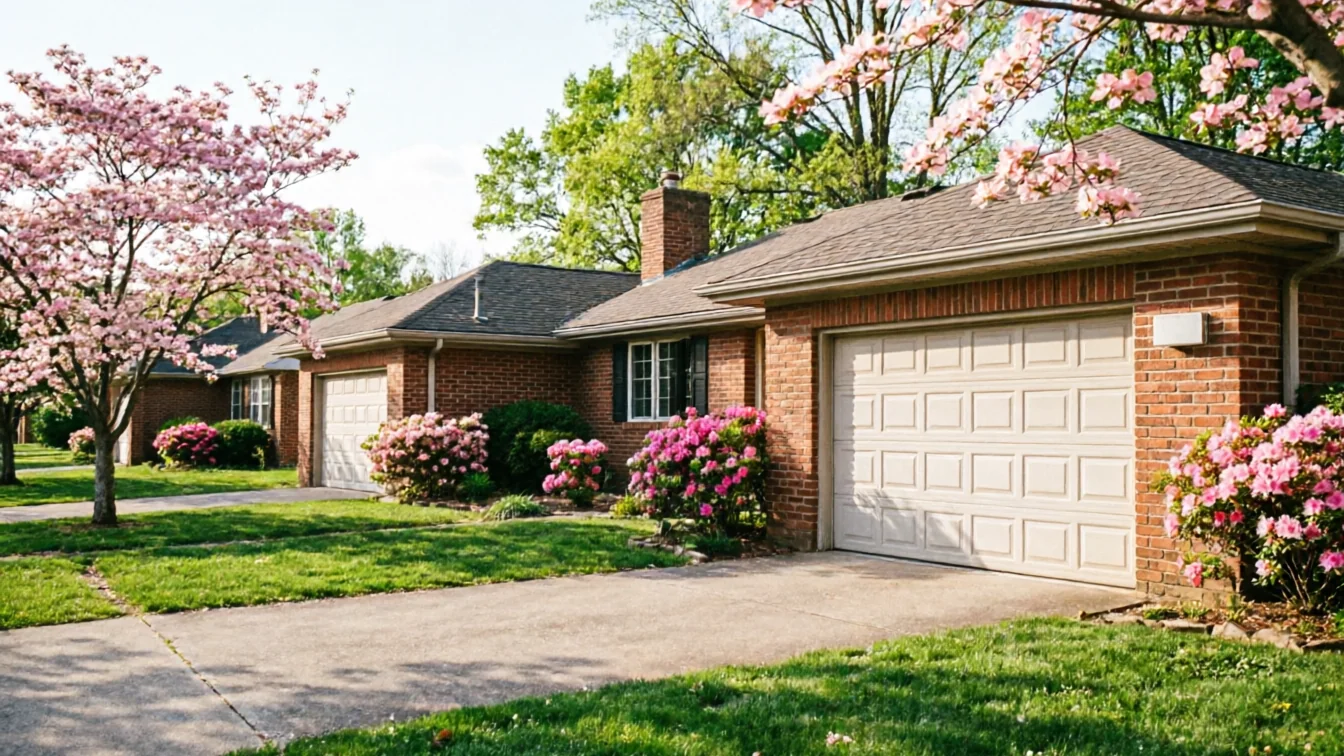
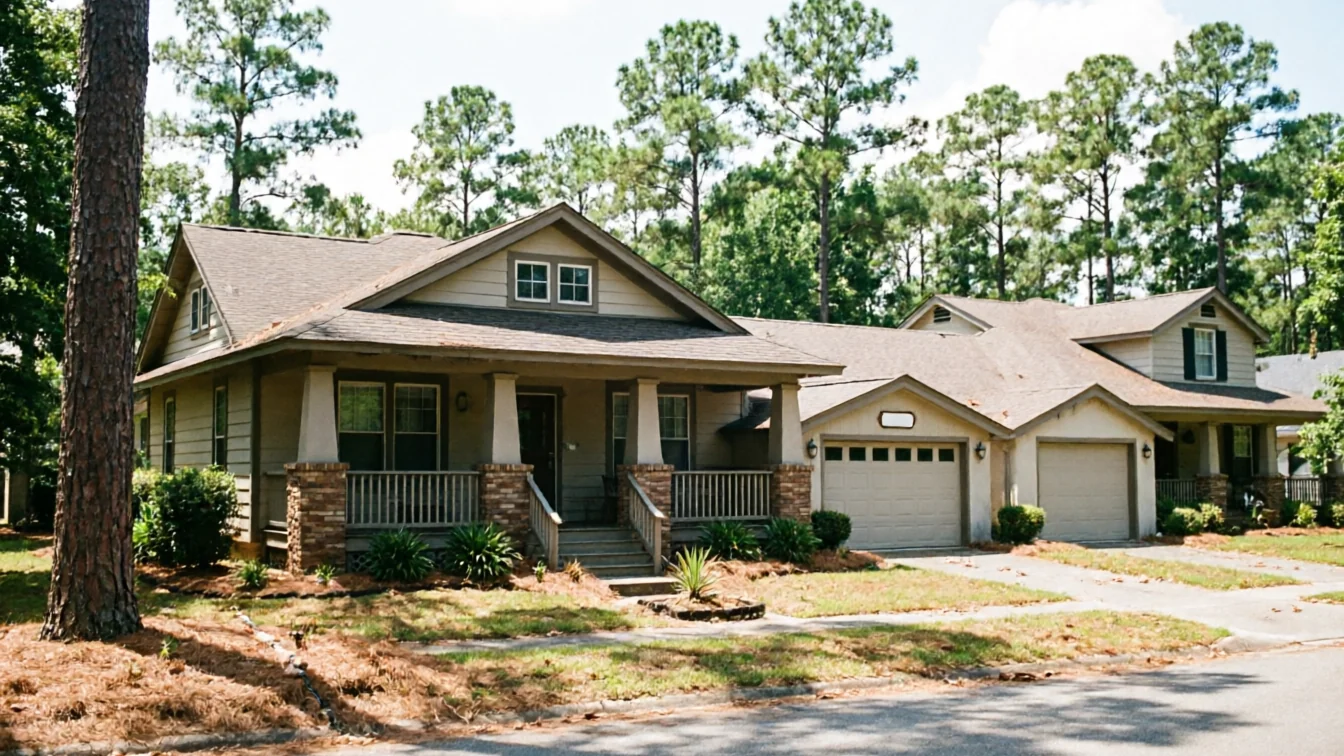
With roughly 1,370 households in Roebuck and a median income around $51,111, most homes here are owner-occupied properties built in that same late-'80s window - not the newer construction you'd find closer to Spartanburg's growth corridor, and not the older pre-war stock you'd find in some of the other named areas nearby.
That consistency means the same failure shows up over and over: a single torsion spring, original to the house, finally giving out somewhere between year twenty-five and thirty-five of daily use.
It's a predictable fault tied to a specific building period, not a random one, which is exactly why a door from a different decade a few miles away fails differently.
Job timing
We run out of Spartanburg, about 5 miles from Roebuck, so there's no separate branch or depot here - the truck comes to you. A straightforward spring or cable job on one of these builder-grade doors is usually quick once we're on site, but we don't quote a fixed response window for Roebuck specifically; drive time and whatever else is on the schedule that day both factor in. If your door needs a part we don't carry on the truck - a discontinued panel section, for instance - that's a lead-time conversation, not a same-visit fix, and we'll say so up front rather than let you wait on a guess.
Questions
Most houses in Roebuck date to around 1989, and the single torsion spring that came standard back then is rated for a specific number of cycles - usually seven to ten years of normal use, which on a thirty-plus-year-old door means it's long past due. There's rarely a dramatic cause; the metal just fatigues.
We stock torsion springs, cables, and rollers sized for the lighter-gauge steel sectional doors common to Roebuck's late-1980s housing stock. What we don't keep on the truck are discontinued panel sections - if a panel's damaged beyond repair, replacement is usually the more honest answer than a hunt for a match.
We work out of Spartanburg, about 5 miles from Roebuck. There's no local branch here, just the truck coming out, so travel time factors into scheduling along with whatever else is on the board that day.
No. On a single-spring setup like most Roebuck doors have, there's no backup holding the shaft under tension while you work, and a spring that releases unexpectedly can cause serious injury. Cable swaps and roller replacement on a door still mounted in its tracks are reasonable DIY tasks - spring work isn't.
Explore more
Ready when you are
Spartanburg Garage Door Pros repairs and installs garage doors, springs and openers in Spartanburg, SC and the surrounding area.